 ALL Electric
Some links on this page are affiliate links. If you buy through them I may earn a commission at no extra cost to you. Read the disclosure.
Compare · Updated
Velotric Discover 2 vs Ride1Up Turris
I've reviewed both of these on my channel. The numbers below are from each brand's listing and my own testing; the takes are from my reviews. A dash means I couldn't verify that number yet.
Key differences
- The Ride1Up Turris lists for $104 less ($1,395 vs $1,499 in my review data).
- The Velotric Discover 2 has the bigger battery: 706 Wh vs 672 Wh.
Velotric Discover 2
7.7AEB Scorehow it worksA comfortable, well-built Class 1/2/3 commuter with a switchable torque/cadence sensor and real safety features.
Ride1Up Turris
7.6AEB Scorehow it worksA simple, comfortable Class 3 commuter with a 750W motor, hydraulic brakes and fenders for well under $1,500.
Some of these are affiliate links: I may earn a commission at no extra cost to you. Disclosure
Side by side
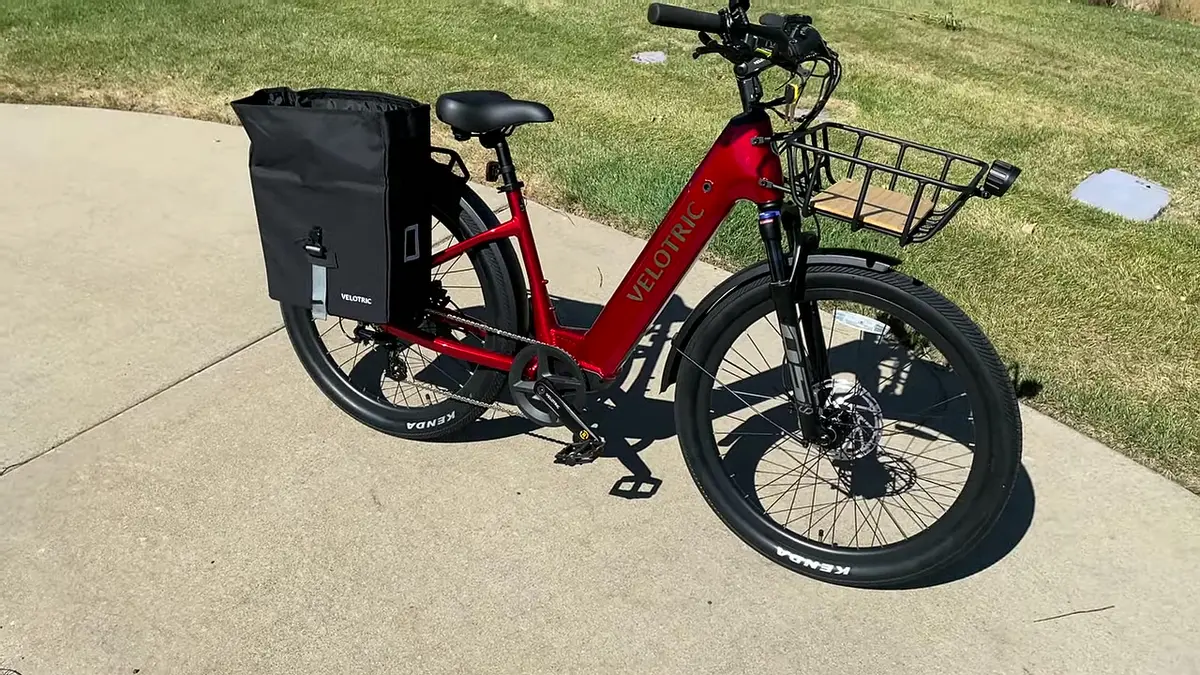 | 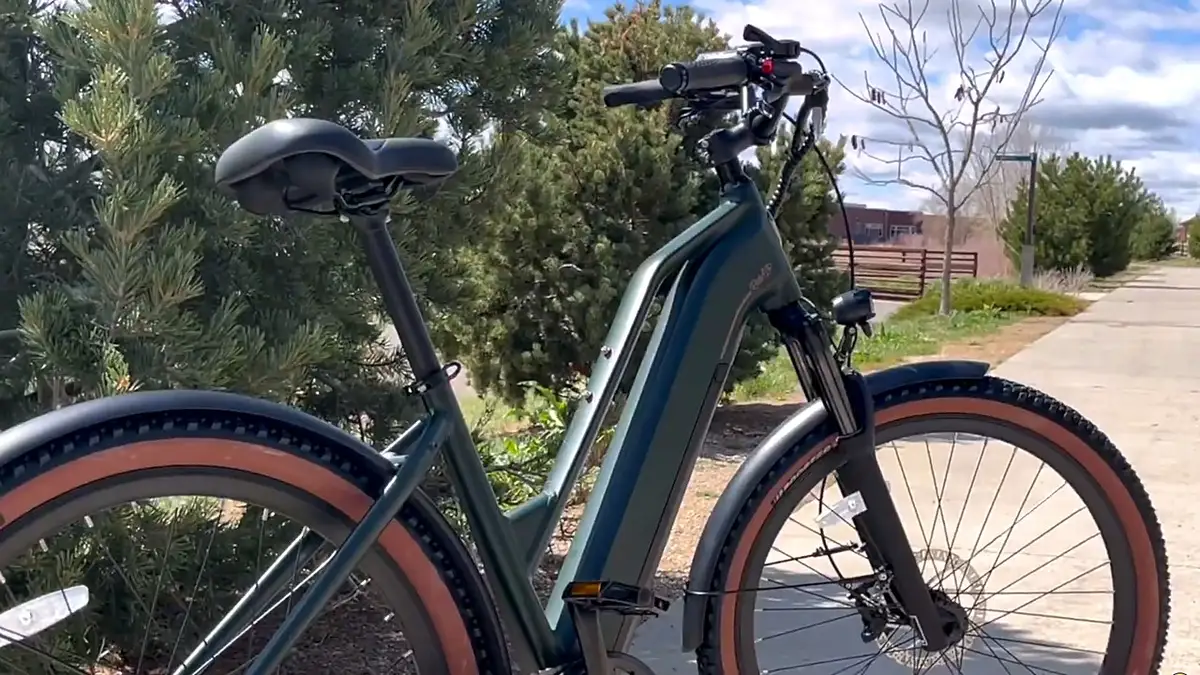 | |
|---|---|---|
| Price | $1,499 | $1,395 |
| Type | Commuter | Commuter |
| Motor | 750 W | 750 W |
| Battery | 706 Wh | 672 Wh |
| Rated range | 75 mi | 50 mi |
| My tested range | — | — |
| Tires | ||
| Weight | 63 lb (Velotric) | 54 lb (Ride1Up) |
| Brakes | Tektro hydraulic, 180 mm | Hydraulic disc, 180 mm |
| Max load | — | 300 lb total |
| AEB Score | 7.7 | 7.6 |
| Buy | See the Discover 2 at Velotric | Check Ride1Up |
On paper, these two look like the same bike. Both are 750W rear-hub commuters with hydraulic brakes, a suspension fork, 27.5 x 2.4 tires and a throttle, and they cost within about $100 of each other right now. Ride them and they’re very different. The Discover 2 is the more finished bike. It comes with lights, signals and a rack, uses a torque sensor and survived about 30 miles of the roughest riding I could find. The Turris is the lighter, simpler budget pick, and the version Ride1Up sells today has changed since I filmed mine.
A quick note on how I got these bikes. Ride1Up sent me the Turris for review, and I said in that video that my opinions remain my own and no one paid me to say anything (Turris video, 0:20 to 0:27). My Discover 2 videos don’t say whether Velotric supplied that bike, so I’m stating that plainly rather than guessing. I didn’t range-test or speed-test either bike, so the range and speed numbers here are the makers’.
The price right now
As of Oct 26, 2026:
- Discover 2: Velotric lists $1,499. That’s a sale price, shown as $500 off the $1,999 list price.
- Turris: Ride1Up lists $1,395, with no sale price shown on the page. When I filmed my review, I quoted $1,295 (0:33).
Velotric now also sells the Discover 3 at $1,999. I haven’t ridden it.
A commute day on the Discover 2
Leaving the house. The power button isn’t where you’d expect. It’s hidden on top of the left-hand controller. Once you know it’s there, you reach over, hold it for a few seconds and the display comes on (first video, 1:10 to 1:30). The display is horizontal, not vertical, with the battery in the corner. Everything is easy to read at a glance, and I’d like more brands to copy it (1:33 to 1:52; follow-up video, 2:07 to 2:21). The grips have extra padding for your palms, which helps on longer rides (0:54).
In traffic. This is where the Discover 2 pulls ahead. Turn signals show on the display and on the integrated tail light on the rear rack, and squeezing the brake lights up a brake light (first video, 1:52 to 2:16). Hold the plus button and the headlight turns on (first video, 4:58 to 5:10). The controls felt solid after about 30 miles of me mashing them (follow-up, 3:26 to 3:38), and the throttle works from zero (follow-up, 3:38). The shifter is the thumb-and-index-finger type, and it’s very easy to use across the 8 gears (first video, 3:40 to 3:50, 6:48).
The hill. I’m about 200 lb, and the Discover 2 took me up any hill I tried with no trouble (follow-up, 1:37 to 1:46).
Rough patches. I took it on just under 30 miles of aggressive terrain, including rough gravel and paved paths, and came back convinced it’s a high-quality bike (follow-up, 0:40 to 1:03). The tires are about 2.5 inches wide and handled well on gravel (follow-up, 1:46 to 1:55). The front suspension and the seat together were plenty for a paved path or fine gravel (first video, 6:22 to 6:46). The saddle has more cushion than most stock seats I’ve tested (6:01 to 6:22).
At work or the store. Front and rear fenders and the rear rack come standard (4:52). The optional front basket is great for a grocery run (5:10 to 5:21). I also showed Velotric’s optional bag. It has a hard floor and a magnetic clip, and there’s a lot of room in it (5:21 to 6:01).
Charging. You can charge the battery on the bike, where the charge port has a watertight seal. Or you can pop it out with the key and charge it inside (first video, 4:37 to 4:52; follow-up, 1:55 to 2:07). Velotric lists a 48V, 3A charger. It doesn’t list a charge time on the product page I checked.
The one complaint. The seatpost kept sliding down on me until I cranked the clamp down hard. Now it holds, but it’s so tight you need two hands to move it (follow-up, 4:11 to 4:30). I’d like to see some texture on the post.
A commute day on the Turris
Leaving the house. The Turris is Ride1Up’s lighter bike here, 54 lb against 63 lb for the Discover 2 (maker specs, Oct 26, 2026). Its alloy frame felt agile and easy to maneuver, and the curved handlebars put me in a comfortable riding position (Turris video, 1:03 to 1:27). It fit perfectly in my Steadyrack wall mount, which matters if you store bikes vertically (3:18 to 3:24).
In traffic. Here’s the big difference from what I filmed. My Turris had a front headlight but no rear tail light, and I said that was the one improvement it needed. Most bikes at this price come with one (3:56 to 4:14). Ride1Up’s current Turris page lists a “Rear Braking Light” and a 60 lux front light (checked Oct 26, 2026). If you’re buying new, the gap I complained about appears to be fixed on paper. I haven’t ridden the updated version. If you’re buying a used Turris, check whether it has the tail light.
Ride1Up lists a left-side thumb throttle that goes to 20 mph and pedal assist to 28 mph (Ride1Up page; my video, 2:18 to 2:28). I didn’t film a throttle-from-a-stop test on the Turris, so I can’t confirm how it behaves from zero.
The hill. I don’t have hill footage or a hill comment for the Turris. My video covers asphalt, concrete and gravel, and the bike handled well on all three (3:46 to 3:53). On climbs, the Turris is not tested.
Brakes and parts. The hydraulic disc brakes were reliable and responsive (2:37 to 2:42). Some parts felt cheap next to higher-end bikes, including the tires and crank arms, though at this price those are easy to overlook (2:42 to 2:51).
At work or the store. Front and rear fenders come standard, which helps if it rains on the way to work (0:41 to 0:55). There’s no rack in the box. Ride1Up says the rack is “Available As Accessory Purchase,” and the Turris page doesn’t show its price. The one Turris accessory with a price there was the Connect+ Basket at $60 (as of Oct 26, 2026).
How far. In the video I said that after 25 miles on an e-bike I’m tired and ready to get off. I called 25 miles a good low-end range, and said a heavier rider should expect about that while a lighter rider pedaling more could get closer to 45 (2:00 to 2:15). That 25-to-45 figure is the range Ride1Up quoted for the battery I tested, not a test I ran (1:27 to 1:41). Ride1Up’s current page says 30 to 50 miles with a larger battery.
Side by side
| Velotric Discover 2 | Ride1Up Turris (current) | |
|---|---|---|
| Price, as of Oct 26, 2026 | $1,499, on sale from $1,999 | $1,395 |
| Motor | 750W rear hub | 750W sustained rear hub |
| Torque | 75 Nm (Velotric) | 90 Nm (Ride1Up) |
| Pedal sensor | Torque, switchable to cadence feel in the app | Cadence (Ride1Up R1CBC, current-based) |
| Battery | 48V, 705.6Wh | 48V 14Ah; 672Wh by my math (48 x 14) |
| Battery in the bike I tested | 705.6Wh | 12.8Ah, as I quoted it (1:29) |
| Maker’s range, pedal assist | 75 mi (187 lb rider, PAS 1, Eco, flat) | 30 to 50 mi; test conditions not listed (Ride1Up says it depends on rider weight, terrain, incline and assist level) |
| Maker’s range, throttle | 60 mi | Not listed |
| My range test | Not tested | Not tested |
| Class and speed | Class 1, 2 or 3; 20 mph default, adjustable 12 to 28 | Class 3, with 28 mph pedal assist and a 20 mph throttle (Ride1Up lists “Class 2-3”) |
| Brakes | Tektro hydraulic, 180 mm rotors, motor cutoff | LBN hydraulic, 180 mm rotors, motor cutoff |
| Fork | Hydraulic suspension, 80 mm travel, lockout | Hydraulic lockout suspension, 100 mm travel |
| Tires | Kenda 27.5 x 2.4, puncture resistant | Kenda K1227 27.5 x 2.4 |
| Gears | Shimano 8-speed, 11-32T | Shimano 7-speed, 12-32T |
| Rear light | Brake light and turn signals, on the rack | Rear braking light (current page); none on my test bike |
| Rack | Included, 66 lb limit | Sold separately; price not listed on the Turris page |
| Weight | 63 lb | 54 lb |
| Max load | 440 lb | 300 lb |
| Rider height | Regular 4’11” to 5’9”; Large 5’6” to 6’4” | 5’1” to 6’2” |
| Water rating | IPX7 battery, IPX6 frame | Not listed |
| Safety certification | UL 2849 bike, UL 2271 battery | UL 2271 battery |
| Anti-theft | Apple Find My | Not listed |
| USB | USB-C phone charging | Not listed |
Specs come from the Velotric Discover 2 page and the Ride1Up Turris page, both checked Oct 26, 2026. The Turris Wh figure is my calculation from Ride1Up’s 48V and 14Ah. Ride1Up doesn’t print a Wh number.
Fit
I’m 6’1” and about 200 lb, and the Turris size was perfect for me (Turris video, 3:01 to 3:10). I filmed the Discover 2 as a step-through (first video, 0:31). In the clips I used, I didn’t say which size it was. On paper, the Discover 2 comes in two sizes covering 4’11” to 6’4”. The Turris lists a single range, 5’1” to 6’2”. If you’re under 5’1” or over 6’2”, the Discover 2 is the one with a listed size for you.
How the pedal sensors feel
The Discover 2 has a torque sensor. Through the Velotric app, you can make it feel like a cadence sensor instead (first video, 3:55 to 4:11; follow-up, 1:03). Some people prefer one, some prefer the other. That makes it a good fit for a couple sharing one bike, since each rider can tune it to their taste in the app (first video, 4:11 to 4:37).
The Turris uses what Ride1Up calls a current-based cadence system. In my video I didn’t describe how its pedal assist felt, so I won’t characterize it here beyond what Ride1Up lists.
Locks and theft
Neither bike comes with a lock. Velotric’s what’s-in-the-box list doesn’t include one, and Ride1Up’s page doesn’t list one either. The Discover 2 has Apple Find My built in, which can help you locate it but won’t stop anyone from riding off. The Discover 2’s battery comes out with a key (follow-up, 1:55 to 2:07). Ride1Up describes the Turris frame as having “internal protected & locked electronics.” Budget for a good U-lock or chain for either bike. I didn’t test either bike’s anti-theft features.
Class 3: where you can ride at 28 mph
Both bikes can run as Class 3, with pedal assist to 28 mph. The Discover 2 ships at 20 mph and can be set anywhere from 12 to 28 mph. The Turris lists 28 mph assist and 20 mph throttle. Class 3 rules vary more than Class 1 and 2. Age limits and helmet rules usually apply to Class 3, and many paths that allow Class 1 and 2 don’t allow Class 3 (e-bike classes explained). In New Jersey, bikes that count as motorized bicycles under MVC rules need a license and MVC registration. My New Jersey page explains which bikes fall into that group. Check your state on my e-bike laws by state page before you unlock 28 mph. If your commute runs on a multi-use path, the Discover 2’s ability to sit at 20 mph is useful, not just a setting.
Ownership and cost
Warranty.
- Velotric (warranty page, checked Oct 26, 2026). The standard 2-Year Limited Warranty covers the frame for 5 years, the battery and electrical parts for 2 years, and other components for 1 year. If you register within 60 days, coverage extends to 10 years on the frame, 3 years or 400 cycles on the battery, and 3 years on electrical parts. Velotric says the extension excludes model year 2024 and earlier, so confirm your bike’s model year when you register.
- Ride1Up (warranty page, checked Oct 26, 2026). One year, covering manufacturing defects only, for the original owner only. It’s not transferable. Parts and labor are covered for the first 30 days. After that, parts are free for the rest of the year and you pay for labor. Report shipping damage or defective parts within 3 working days.
That’s the biggest ownership gap between these two. Velotric gives you up to 10 years on the frame and 3 years on the electrical parts if you register. Ride1Up gives you 1 year.
Returns.
- Velotric (return policy, checked Oct 26, 2026). You get 14 days from delivery, with no mileage limit. Restocking costs $200 if the bike is unused or 22% of the price if it’s used. Refusing a shipment costs $200, and “Built and Delivered” fees aren’t refundable.
- Ride1Up (return policy, checked Oct 26, 2026). You get 30 days and a 100% refund if the bike comes back in delivered condition. That means under 20 miles on the odometer, no assembly damage, all contents included and photos. There’s a $250 fee if you cancel during or after shipping, or refuse the delivery, and a 3% processing charge if you cancel before it ships. Accessories have 14 days and a 25% restocking fee.
Read those carefully. Ride1Up’s window is longer and has no restocking fee, but it’s under 20 miles. Velotric’s has no mileage cap but charges a fee.
Shipping.
- Velotric (shipping policy, checked Oct 26, 2026). Free shipping in the continental US. Most orders arrive in 3 to 5 business days.
- Ride1Up (shipping page, checked Oct 26, 2026). Free in the contiguous US on orders over $100. In-stock bikes ship within 1 business day. Transit takes 1 to 6 days, or 5 to 10 business days for freight. The Turris page lists Hawaii and Alaska at $600 and Canada at $100.
Assembly. The Turris arrives 85% assembled, with the electronics pre-assembled. The box is about 53 x 10 x 27 inches and weighs about 70 lb (Turris page). Ride1Up says professional assembly isn’t required but is suggested. The Discover 2 ships with a toolkit for assembly, plus the battery, charger, lights, fenders, rear rack, bell, kickstand and pedals (Velotric’s what’s-in-the-box list). I didn’t film assembly for either bike.
Dealers and test rides. Velotric lists 1,600-plus dealer shops on the Discover 2 page. Ride1Up is direct-to-consumer, and its FAQ says you’ll “generally pay a premium for the ability to test ride through a dealer.” If you want to try before you buy or have a local shop service it, that favors the Discover 2.
Accessories, as of Oct 26, 2026.
- Velotric: Front Basket $119.99, Rear Rack Pannier Bag $74.99, Rack Top Bag $95.99, Suspension Seatpost 2.0 $119.99, Extra Battery Pack $549.99. Velotric shows lower prices on some of these when you bundle three or more with a bike.
- Ride1Up: The Turris page priced the Connect+ Basket at $60. Rack price not listed there.
Who should buy which
Get the Discover 2 if:
- You commute in traffic and want a brake light and turn signals that I’ve actually tested (first video, 1:52 to 2:16).
- You have hills (follow-up, 1:37 to 1:46).
- You want a rack in the box, a torque sensor or a longer warranty.
- You’re shorter than 5’1” or taller than 6’2”.
Get the Turris if:
- You want the lighter bike (54 lb vs 63 lb).
- You hang your bikes on a wall rack (3:18 to 3:24).
- You prefer a simple cadence-style assist.
- You like Ride1Up’s 30-day return with no restocking fee under 20 miles.
- Your rides are mostly flat pavement and gravel (3:46 to 3:53).
Who shouldn’t buy either
- You carry heavy loads or a passenger regularly. The Turris tops out at 300 lb total and has no rack included. The Discover 2’s rack is rated at 66 lb. A cargo bike is the better tool.
- You ride steep trails. These are commuters. The Discover 2 handled rough gravel, but neither one is a mountain bike.
- You need to carry the bike up stairs every day. Even the lighter Turris is 54 lb.
FAQ
Is the Discover 2 on sale? Yes. As of Oct 26, 2026, Velotric shows $1,499, down $500 from $1,999.
Does the Turris have a tail light? The one I tested didn’t (3:56 to 4:14). Ride1Up’s current page lists a rear braking light.
Which one has more torque? On paper, the Turris: 90 Nm per Ride1Up, against 75 Nm per Velotric. I didn’t measure torque, and I only have hill footage for the Discover 2.
What’s the battery capacity in Wh? The Discover 2 is 705.6Wh. The current Turris is 48V 14Ah, which works out to 672Wh by my math. Ride1Up doesn’t print a Wh figure.
Can I set them to 28 mph? Both can run at 28 mph pedal assist. Check your state’s Class 3 rules first at /laws/.
Do they come with a rack? The Discover 2 does, rated for 66 lb. The Turris doesn’t. Ride1Up sells one separately.
Which has the better warranty? Velotric. It’s 2 years standard, extendable to 10 years on the frame and 3 years on the battery and electrical parts if you register within 60 days, with model-year exclusions. Ride1Up’s is 1 year, original owner only.
Full reviews and videos
Sources
- My Discover 2 videos: https://www.youtube.com/watch?v=ntlBeGEuM50 (first) and https://www.youtube.com/watch?v=EjFFAMh8Vdk (follow-up)
- My Turris video: https://www.youtube.com/watch?v=R-yUvCXrBMM
- Velotric Discover 2 page, including specs, price, box contents and accessories: https://www.velotricbike.com/products/velotric-discover-2 (checked Oct 26, 2026)
- Velotric warranty, returns and shipping: https://www.velotricbike.com/pages/warranty, https://www.velotricbike.com/pages/return-refund-policy and https://www.velotricbike.com/policies/shipping-policy (checked Oct 26, 2026)
- Ride1Up Turris page: https://ride1up.com/product/turris/ (checked Oct 26, 2026)
- Ride1Up warranty, returns and shipping: https://ride1up.com/warranty-info/, https://ride1up.com/return-and-pre-order-policy/ and https://ride1up.com/shipping/ (checked Oct 26, 2026)
- E-bike classes and state laws: /guides/ebike-classes-explained/ and /laws/
What I said about the Velotric Discover 2
A comfortable, well-built Class 1/2/3 commuter with a switchable torque/cadence sensor and real safety features.
Buy the Discover 2 if you want a comfortable, well-built commuter with real safety features: hydraulic brakes, turn signals, a brake light, and a rack and fenders in the box. You can also switch the pedal assist between torque and cadence in the app. I tested it for several weeks. Then I rode just under 30 miles of rough gravel and paved paths as a torture test. My conclusion was that it really is a very high-quality e-bike (0:40 to 1:03, part 2). Skip it if you need a lighter bike, or if you want to change your seat height often without tools. The seat post slipped on me until I clamped it so tight that it took two hands to move (4:11 to 4:30, part 2).
My video review, published
Liked
- Switchable torque/cadence
- Hydraulic brakes
- Turn signals + brake light
- Rack and fenders included
- Horizontal color display
- Solid after 30 rough miles
Didn't
- Seat post slips unless clamped hard
- 63 lb
- Basket and bag extra
What I said about the Ride1Up Turris
A simple, comfortable Class 3 commuter with a 750W motor, hydraulic brakes and fenders for well under $1,500.
I rode the Turris for several weeks and called it a fantastic e-bike that offers exceptional value at its price. The 750W motor accelerates well, the hydraulic brakes are reliable, and the fenders and upright position make it an easy commuter. Some parts, like the tires and crank arms, felt a bit cheap, and my test bike had no rear tail light (Ride1Up now lists one).
My video review, published
Liked
- Exceptional value; it was $1,295 when I tested it
- 750W motor with excellent acceleration
- Class 3: 28 mph pedal assist, 20 mph throttle
- Reliable, responsive hydraulic disc brakes
- Front and rear fenders included
- Comfortable, upright position from the curved handlebar
- Fit me well at 6’1” and 200 lbs
- Looks great, with gum sidewall tires
- Handled asphalt, concrete and gravel
Didn't
- Tires and crank arms felt a bit cheap
- No rear tail light on my test bike; Ride1Up now lists one
- Rear rack costs extra
- Cadence-based assist, no torque sensor
Who should skip each one
- Velotric Discover 2: skip it if this is a dealbreaker: Seat post slips unless clamped hard
- Ride1Up Turris: skip it if this is a dealbreaker: Tires and crank arms felt a bit cheap
More: all comparisons · buying guides · how I test