
A hub motor lives in the wheel, usually the rear, and turns the wheel directly. A mid-drive lives at the bottom bracket, where the pedals are, and drives the chain. That one difference changes how the bike climbs, how it uses gears, and often whether you get a throttle.
This is not a “best e-bike for hills” list. I already wrote that hills guide. This is the motor comparison itself, from bikes I have actually ridden.
What I felt on a mid-drive
The original Aventon Ramblas was Aventon’s first mid-drive, and I called the torque insane, especially climbing a hill (3:33 to 3:52). I also said not to be deceived by the small power output, and that the amount of torque was able to propel me up a hill (4:42 to 4:53). On paper that motor is rated 250 W sustained and 750 W peak, with 100 Nm of torque. Watts are not what I felt at walking speed on a climb. Torque is.
Because the motor drives the chain, a low gear multiplies that twist. In the same video I talked about wanting the motor in a super low gear to get my body up the hill so I could ride down again (3:47 to 3:53).
Aventon now sells the Ramblas ADV, which I have not ridden. The climb notes above are from the original Ramblas I filmed. The current buy button goes to the ADV, which was $2,899 on Aventon’s site as of Oct 22, 2026. The original launch price I used in my review is $2,699, per Ebike Escape, because Aventon’s original product page is gone.
What I felt on a hub motor
A hub motor does not use the gears to multiply torque. The motor just turns the wheel. That can still be plenty. On the Aventon Aventure 3, a 750 W hub bike, I had plenty of power for any incline as long as I was pedaling (6:36 to 6:48 in that review). The Pace 500.3’s 500 W hub had no problem getting me up any incline at about 200 pounds (4:41 to 4:53 in that review). Aventon no longer lists the Pace 500.3 in the US.
Hub bikes are also the ones that usually offer a throttle, which is how a Class 2 bike can move you without pedaling up to 20 mph. The Ramblas I rode was a Class 1 mid-drive with no throttle. If you want that throttle, a hub Class 2 is the usual way to get it. I go through the class limits in e-bike classes explained.
I have also stalled a weaker hub motor. A 350 W hub I tested died on a little hill and I started rolling back down. I tell that story in the hills guide. So “hub” is not one feel. Motor size, torque and your weight all show up.
If you mostly climb steep trails and like to pedal, the mid-drive is what I would look at first. If you want a throttle and a simpler drivetrain, a stronger hub bike can still get a 200 pound rider up the inclines I ride. I have not put a power meter on either layout, so I am describing the ride, not a lab chart.
Gears are a separate question. Sensor feel is covered in cadence vs torque sensor.
Watch the video
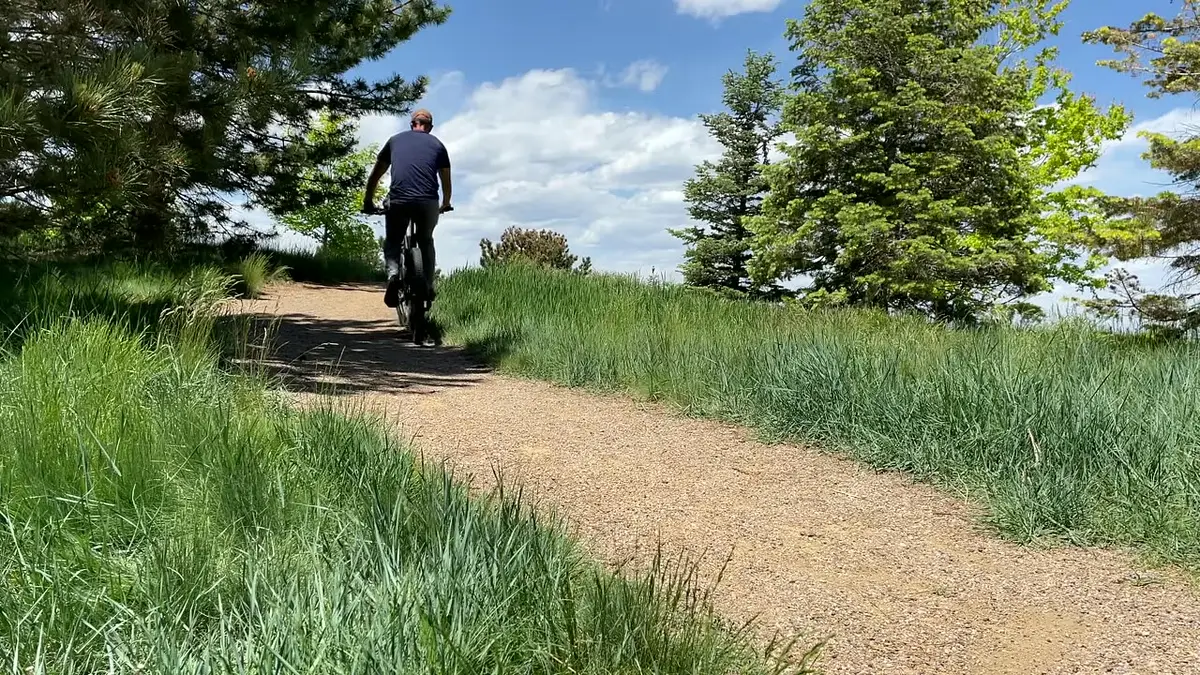
The video starts at the moment this answer comes from.
Bikes mentioned
Related
Updated