
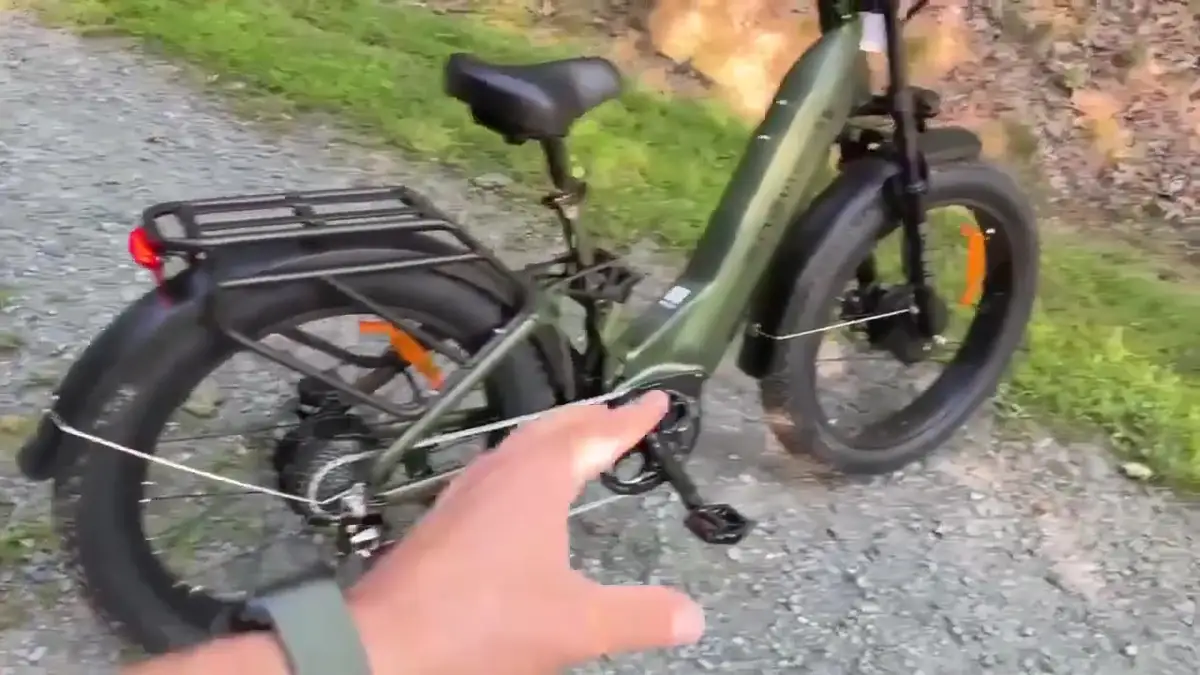
Most e-bikes I review have one motor in the rear hub. Two of the bikes I've tested on my property this year had a second motor in the front wheel: the Engwe E26 3.0 Dual Motor and the Freesky Ranger Air M-540. The question I get most about them is simple: is the second motor worth the extra weight and money? I filmed the answer on a steep gravel climb, first with the rear motor alone and then with both. Here's what happened, and who I think should actually buy one.
The short answer
- Worth it if you ride steep gravel or dirt, you're a heavier rider, or you'll haul gear for camping or hunting. On my steepest climb, the rear motor alone stalled and both motors pulled me straight up on throttle.
- Not worth it if you mostly ride pavement or bike paths. You'd be carrying about 10 to 20 extra pounds and giving up rated range for power you won't use. The single-motor Engwe E26 climbed my hills fine at about 200 lb.
- Check the law first if you'll ride on public roads. Two motors can push a bike past what your state counts as an e-bike.
What the second motor actually does
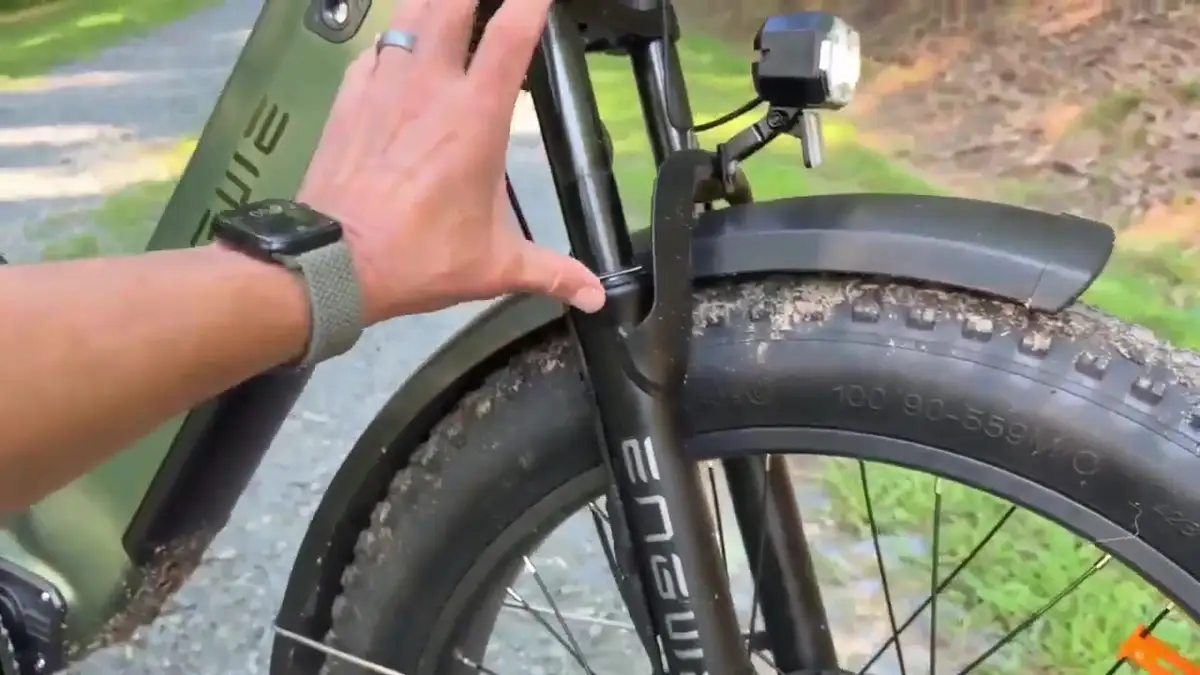
A dual-motor e-bike puts a hub motor in each wheel. The rear one pushes like any hub-drive bike, and the front one pulls. What I noticed most is traction: on loose gravel a single rear motor can spin or bog down, while a front motor drags the front tire up the hill with you. On the E26 3.0 I said the front motor makes a really big difference on uneven surfaces, when you're towing something, or when you're climbing (4:57 to 5:13). On the Freesky I said the front tire will pull you up a steep incline on gravel (1:35 to 1:43).
It also changes how the bike feels. Even though the E26 3.0 is heavy, I said it felt like a nimble regular mountain bike once I was moving (10:29 to 10:52).
My test: rear motor only vs both motors
I took the Engwe E26 3.0 Dual Motor to the steepest part of my property and rode the same stretch twice, on throttle only with no pedaling. I'm about 200 lb.
- Both motors, Eco assist: it climbed a decent slope with no problem, then dropped to about 9 mph at full throttle on the steep part. It bogged down a bit but never stopped (7:13 to 8:22).
- Rear motor only: I switched to single-motor mode at the bottom of the steepest pitch. Even after bumping it to Sport, I came to a complete standstill at full throttle, and the motor gave out. I tried again from a stop and it couldn't make it up at all (8:46 to 9:43).
- Both motors again: back in dual mode at full throttle, from a standstill on the same incline, I could feel the front tire pulling me up, and it went right up past the hill (9:43 to 10:00).
Then I tried a harder one: a long gravel road up to a ridge that looks even more aggressive from the bottom. In dual mode, still no pedaling, the speed fell from 10 to 9, then 8, 7 and finally 5 mph, and it made the peak (12:32 to 13:28). I said at the time that some of the single-motor bikes I've tested couldn't have climbed that without pedaling.
That's the honest summary of what a second motor buys you: not top speed, but the ability to keep climbing when one motor runs out of grip or power.
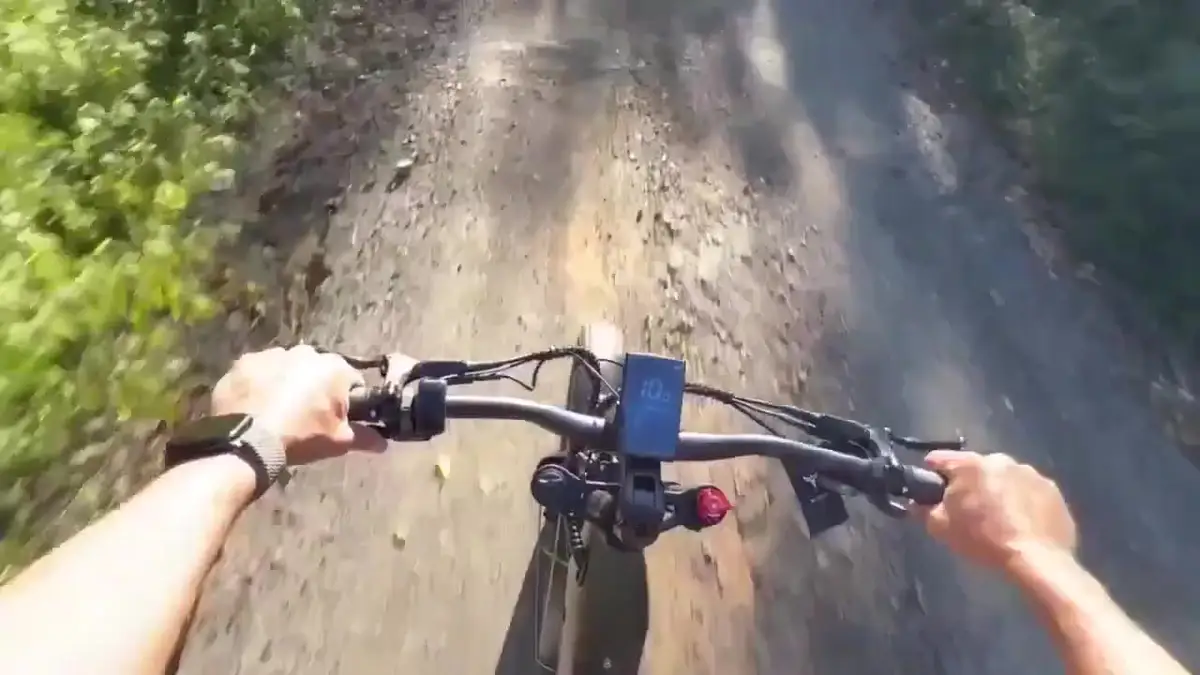
My full Engwe E26 3.0 Dual Motor review. The rear-only stall starts around 8:46 and the ridge climb around 12:32.
What a good single motor can do
Before you assume you need two motors, compare the single-motor Engwe E26 I reviewed in 2024. It's a similar-looking fat-tire bike with one rear hub that Engwe rates at 1,000 W peak and 70 Nm. I tested it on several inclines, and at about 200 lb I had no issue with power (3:00 to 3:11). Most hills on pavement or packed trails are like that. The second motor earned its keep on my steepest loose gravel, not on normal hills.
I compared the two Engwes directly in Engwe E26 vs E26 3.0 Dual Motor. Engwe lists the original E26 as sold out (as of Oct 22, 2026), so today the single-motor choice is a different bike, but the lesson holds.
What you give up for two motors
These are the makers' numbers, checked in October 2026, next to what I saw.
| Engwe E26 3.0 Dual Motor | Freesky Ranger Air M-540 | Engwe E26 (single motor) | |
|---|---|---|---|
| Motors (maker) | Front and rear hubs, 2,000 W peak, 160 Nm | Front and rear, 2,000 W peak and 105 Nm each | One rear hub, 1,000 W peak, 70 Nm |
| Battery (maker) | 48V 20Ah, 960 Wh | 48V 25Ah, 1,200 Wh | 48V 16Ah, 768 Wh |
| Rated range (maker) | Up to 46 mi dual, 76 mi rear only | 40 to 60 mi dual, 60 to 105 mi single | Up to 87 mi |
| Weight (maker) | 85.9 lb | 95 lb | 73.8 to 76 lb |
| Top speed (maker) | Not listed in my data; I called it a Class 2 in my video | Ships at 20 mph; up to 34 mph listed | 28 mph |
| Price (maker) | $1,799, regular $2,399 (Oct 23, 2026) | $1,399 (Oct 23, 2026) | $1,699, sold out (Oct 22, 2026) |
| Starts in | Rear motor only | Rear motor only | n/a |
Weight. Both dual-motor bikes are heavier than most e-bikes I review, and heavier than their single-motor siblings. That matters if you need to lift the bike onto a rack or carry it up stairs.
Range. Engwe's own figures cut the E26 3.0's rated range by about 40 percent in dual mode. Freesky's ranges show the same pattern. That's why both bikes let you run on the rear motor alone.
A daily annoyance. Both bikes power on in rear-motor-only mode every single time. On the Engwe you hold both turn-signal buttons until it flashes P3 and both motors light up on the display (2:41 to 3:25). On the Freesky it's the circle button (0:50 to 1:05). On both, I said I wish there was a way to default to dual mode, because that's how I ride.
The Freesky Ranger Air: two motors, one big caveat
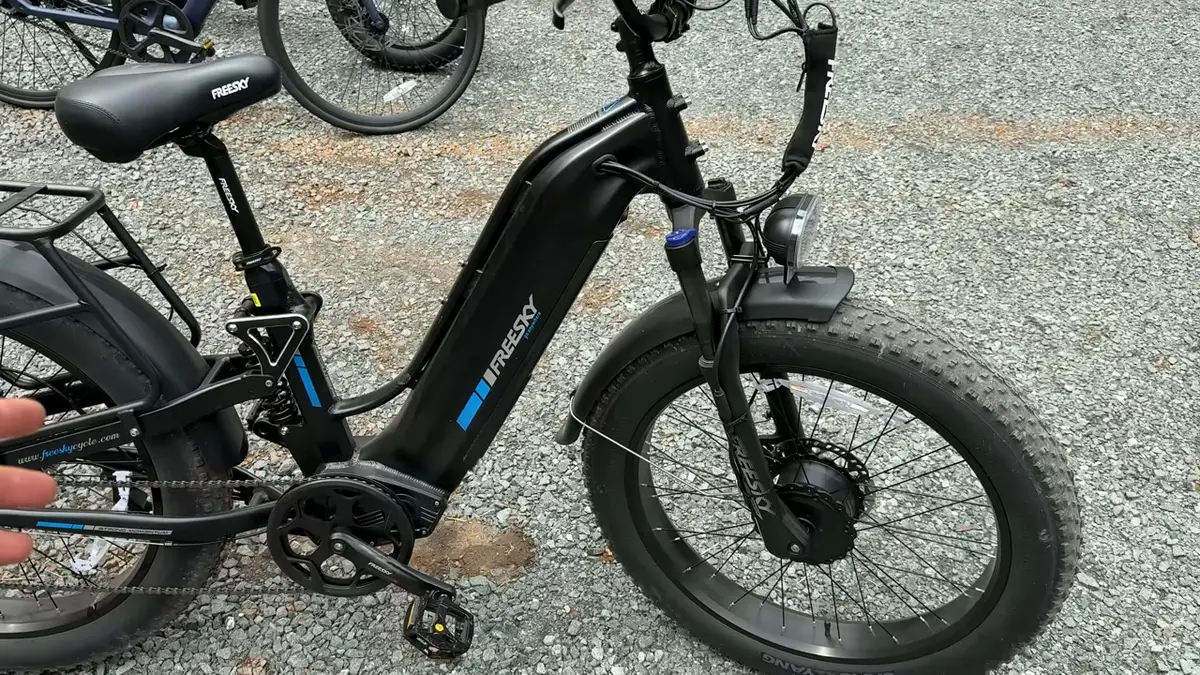
The Freesky Ranger Air is the cheaper of the two dual-motor bikes I rode. It has a fork and a rear shock, and I said it rides super smooth, like riding on a surfboard (1:43 to 1:52). It unlocks with a passcode or an NFC card you tap on the display (0:33 to 0:48). I also said the build quality is pretty great (1:12 to 1:17).
The caveat is speed. Freesky lists the Ranger Air at up to 34 mph, and says it ships limited to 20 mph. At 34 mph it isn't a Class 1, 2 or 3 e-bike anywhere, so if you'll ride on roads or paths, leave it at the limit it ships with. I compare it head to head with the Engwe in Freesky Ranger Air vs Engwe E26 3.0.
Are dual motor e-bikes street legal?
This is the question I'd answer before buying. The federal product definition and the state e-bike laws I've read describe an e-bike as having fully operable pedals and a motor under (or at most) 750 W, then sort it into Class 1, 2 or 3 by top assisted speed. You can read the exact wording for your state on my e-bike laws by state pages, and a few states spell out what happens above that line. Hawaii's 2026 law, for example, calls devices over 750 W that can go faster than 28 mph "high-speed electric devices" and bans them from public roads, bike lanes and paths (Hawaii page).
What I haven't found in those laws is a rule for adding up two motors. Engwe lists 2,000 W peak for the E26 3.0 and Freesky lists 2,000 W peak per motor, and peak and rated (continuous) watts aren't the same thing. So I won't tell you a dual-motor bike is legal or illegal where you live. What I'd do: check the class label on the frame, keep the speed limit set at 20 or 28 mph to match a class, and read your state's page. On private land, which is where I filmed both of these, none of that applies. My e-bike classes explainer covers the basics.
Who should buy a dual-motor e-bike
- Heavier riders on hilly ground. After my test I said if you're a heavier guy worried about a bike going up a hill, worry no longer (10:00 to 10:27).
- Hunters, campers and anyone loading up gear. That's the use I kept coming back to on the Engwe, and it comes with a rear rack (4:01 to 4:23).
- Riders on loose gravel and dirt roads. Front-wheel pull helps most where the rear tire would spin.
Who should skip it
- Pavement commuters, who are better served by a lighter single-motor bike. Start with my commuter guide.
- Anyone who has to lift the bike often.
- Riders who want the most range per charge.
If hills are your main worry but you don't want the weight, my best e-bikes for hills and best e-bikes for heavy riders guides cover single-motor and mid-drive bikes that climbed well for me.
FAQ
Are dual motor e-bikes worth it?
Only if you ride steep dirt or gravel, you're a heavier rider, or you haul gear. On the Engwe E26 3.0 the rear motor alone stalled on a steep gravel climb at about 200 lb, and with both motors on it pulled me up from a standstill on throttle alone. If you mostly ride pavement, a good single-motor bike is lighter, cheaper and goes farther on a charge.
Does a second motor drain the battery faster?
On the maker's own numbers, yes. Engwe rates the E26 3.0 at up to 46 miles in dual-motor mode and up to 76 miles on the rear motor alone, both at the lowest assist level. Freesky lists 40 to 60 miles dual and 60 to 105 miles single for the Ranger Air. I did not run a range test on either bike.
Can you turn one motor off?
Yes, on both dual-motor bikes I tested. In fact both start in rear-motor-only mode every time you power them on, and you press a button to bring the front motor in. I wish they remembered dual mode.
Are dual motor e-bikes street legal?
It depends on the bike's power and speed and on your state. State e-bike laws I've read define an e-bike with a motor of 750 W or less, and they don't spell out how to count two motors. Freesky lists the Ranger Air at up to 34 mph, which is past every e-bike class, though Freesky says it ships limited to 20 mph. Check the class label on the bike and your state on my e-bike laws page before you ride on public roads.
How heavy are dual motor e-bikes?
Heavier than their single-motor siblings. Engwe lists the E26 3.0 Dual Motor at 85.9 lb and the single-motor E26 at 73.8 to 76 lb. Freesky lists the Ranger Air at 95 lb.
How I tested
Everything above comes from my own videos: the Engwe E26 3.0 Dual Motor review (published Aug 30, 2026), the Freesky Ranger Air review (Aug 27, 2026) and the Engwe E26 review (Oct 20, 2024). I rode both dual-motor bikes for several weeks on gravel and dirt on my own property. I didn't measure range, top speed or grade, and the speeds above are what the display showed on camera. Specs and prices are from Engwe's and Freesky's sites, checked Oct 22 to 23, 2026, and they change often. Full reviews: Engwe E26 3.0, Freesky Ranger Air, Engwe E26.
The Check buttons are affiliate links: I may earn a commission at no extra cost to you. Disclosure